
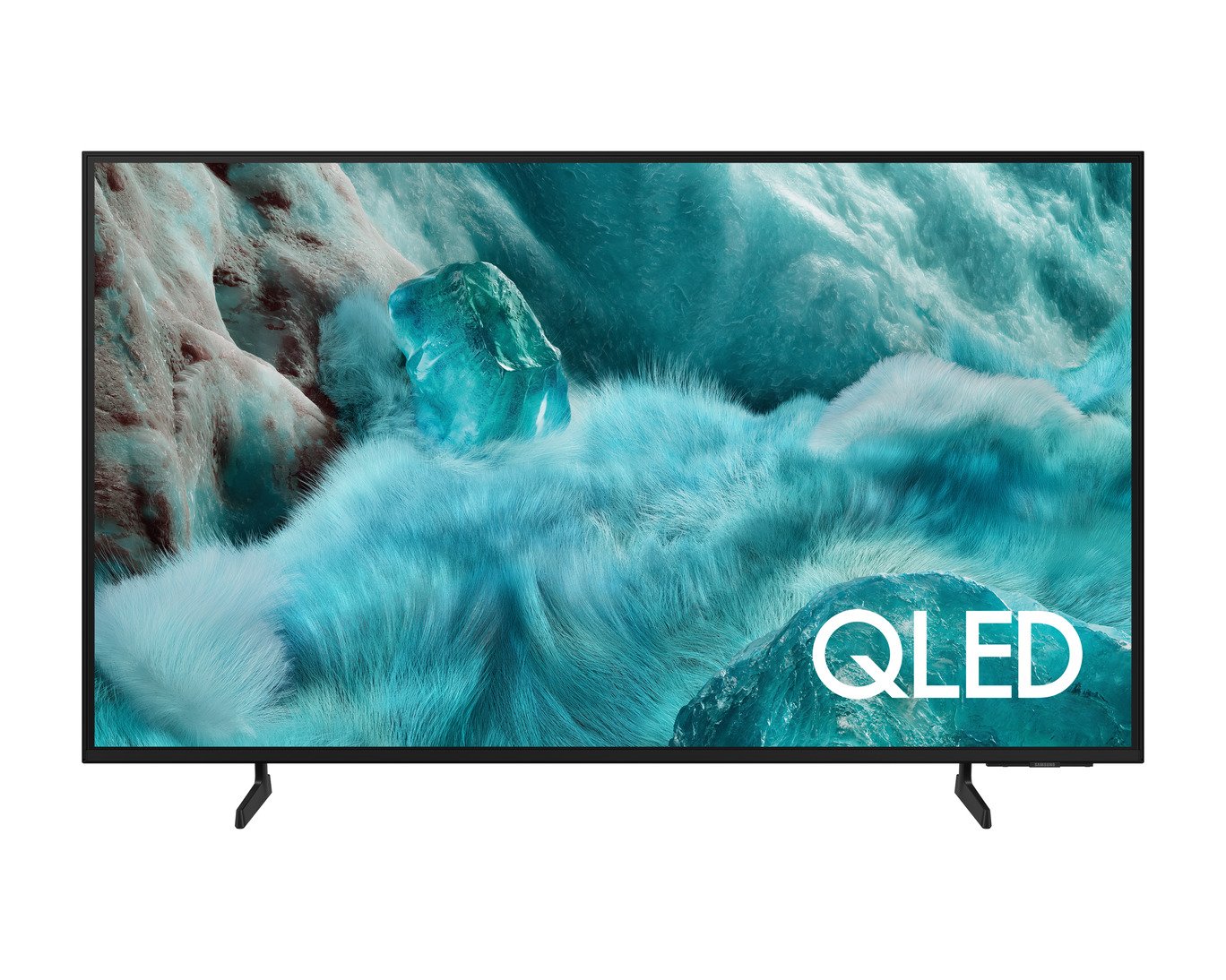
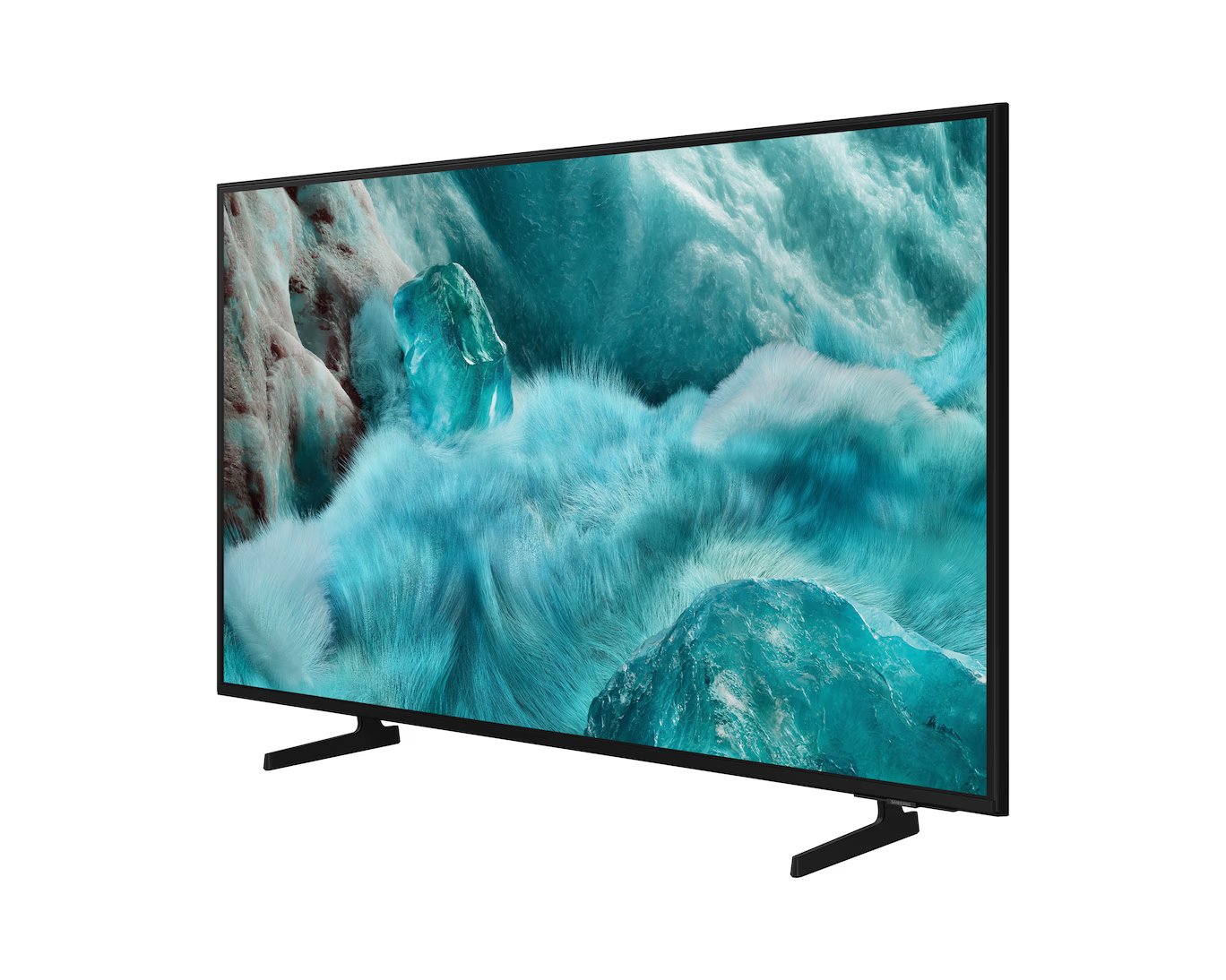
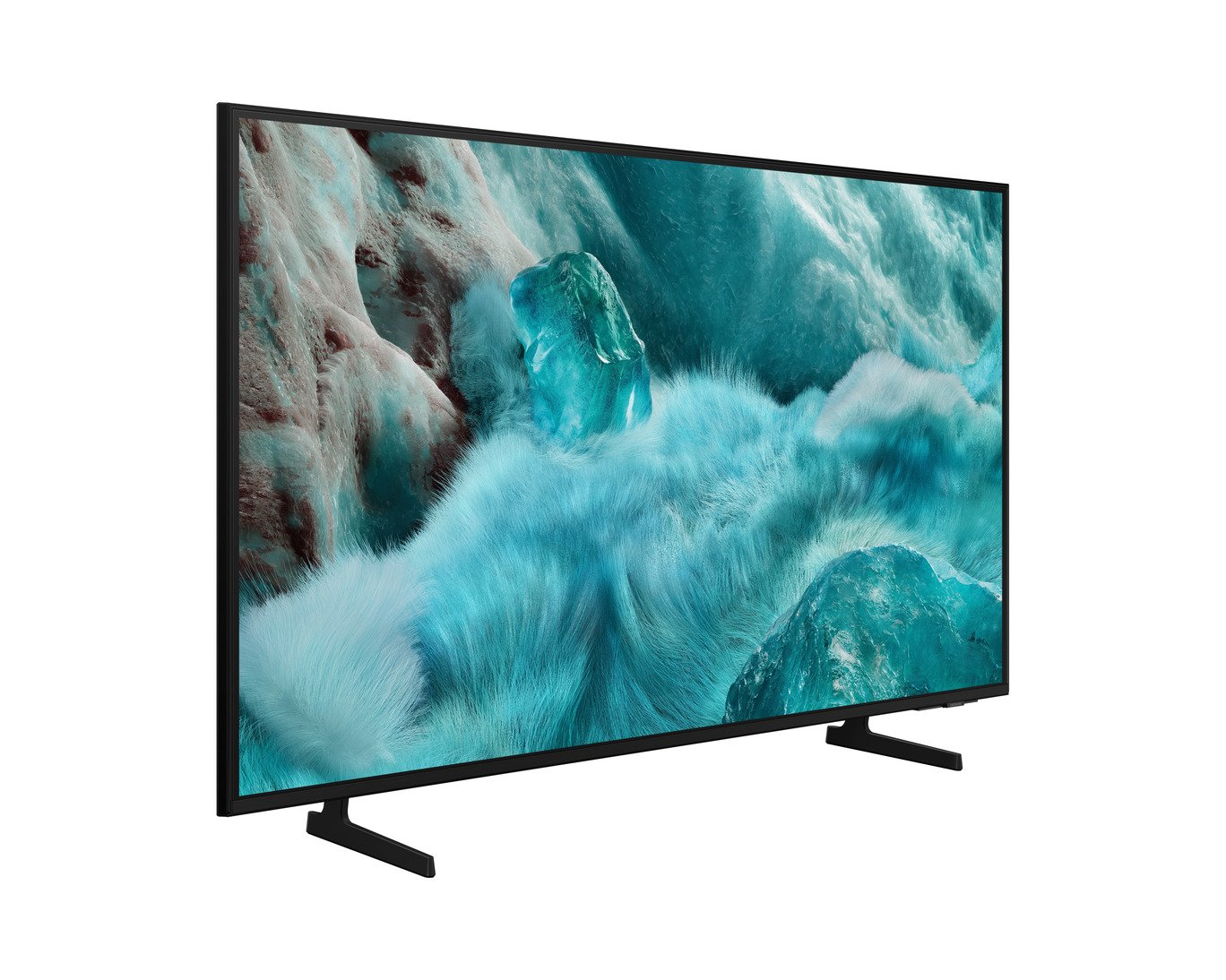
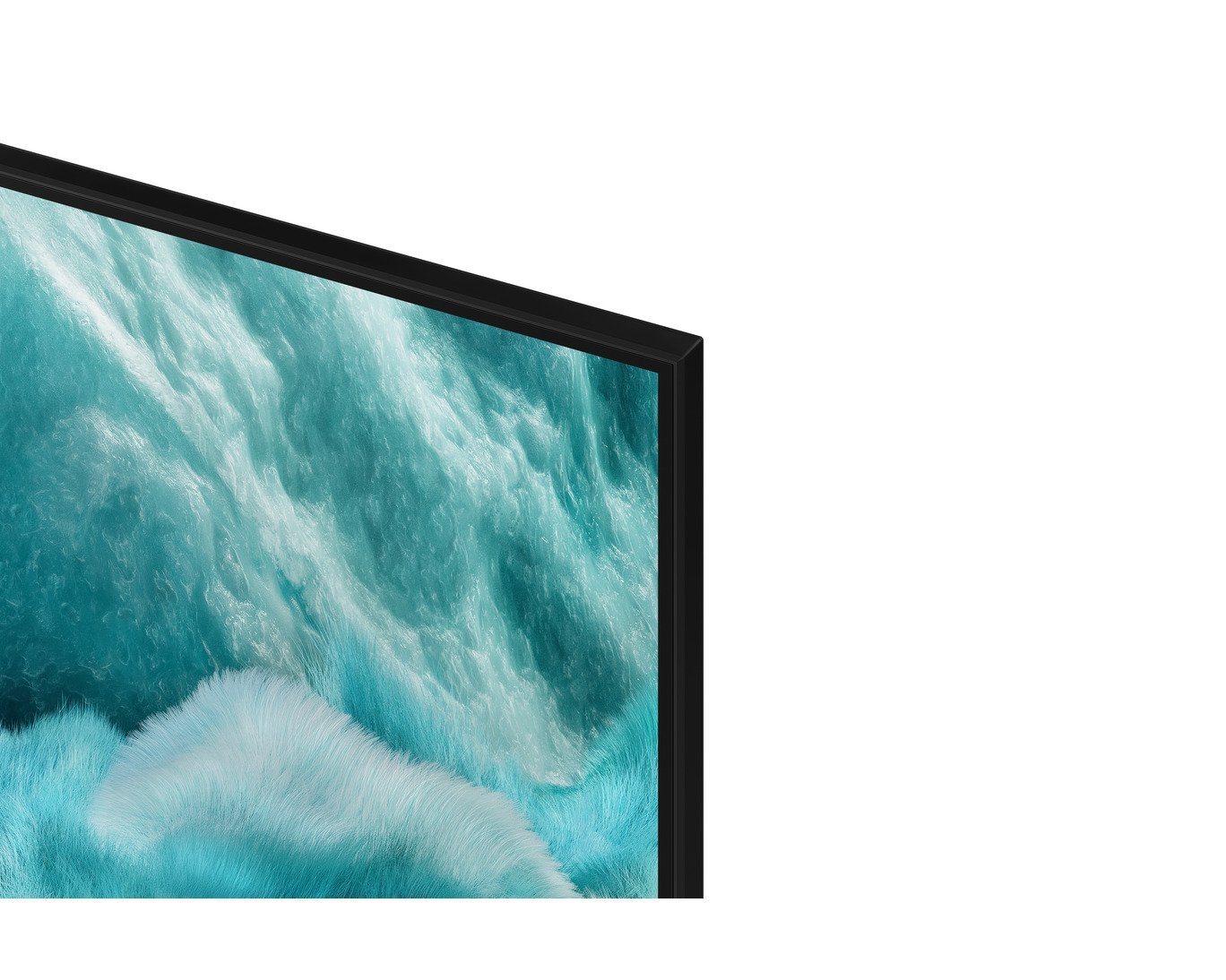
Samsung 55 Inch QLED Q7F 4K Vision AI Smart TV (2025)
Display:
55″ QLED (Quantum Dot LCD) panel
Resolution:
4K UHD (3840 × 2160)
Refresh rate:
60Hz native (Motion Xcelerator 60)
HDR support:
HDR10+, HDR10, HLG (Quantum HDR)
Smart TV system:
Tizen OS (Samsung smart platform)
Audio:
20W speakers (2-channel, Object Tracking Sound Lite)
KSh72,000.00 KSh78,000.00
The Samsung 55 Inch QLED Q7F 4K Vision AI Smart TV (2025) marks a compelling evolution in mid-range home entertainment. By embedding deep artificial intelligence directly into the panel’s processing core, this television changes how standard ultra-high-definition screens treat upscaling, colour expression, and smart home orchestration. This comprehensive breakdown evaluates every core element of the display, diving into its picture engine, gaming facilities, spatial audio engineering, and localised smart features.
Hardware Configuration and Bezel Design
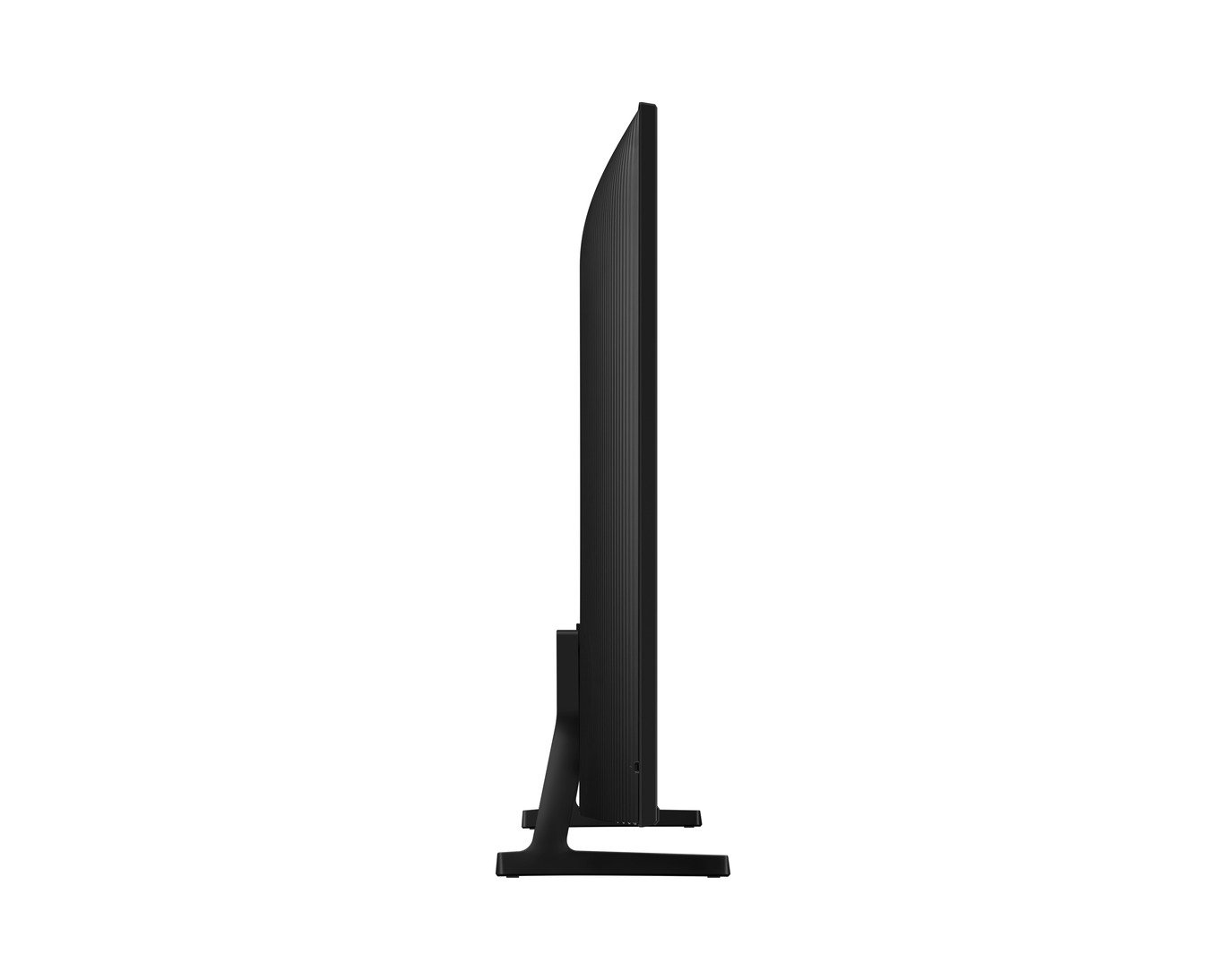
Samsung’s design philosophy for the Samsung 55 Inch QLED Q7F 4K Vision AI Smart TV (2025) targets a gallery-style installation. The display chassis relies on a modern, ultra-thin profile that measures under 26 mm in total depth. This design allows the massive 55-inch frame to hang completely flat when mounted onto a standard wall bracket.
The front of the screen utilises a 3-sided borderless aesthetic. By reducing the structural bezel down to a fraction of an inch, the visual boundary between the content and your living room disappears entirely. The panel rests on a heavy, centred sand-black plate stand. This localised stand choice means you do not need an excessively wide entertainment console to position the TV securely, preventing common home setup complications.
Picture Quality and the Silicon Brain: Analysing the Q4 AI Processor
The core processing task inside the Samsung 55 Inch QLED Q7F 4K Vision AI Smart TV (2025) falls to the new Q4 AI Processor. This specialised silicon chip actively monitors incoming video frames to manipulate picture clarity, contrast ratios, and colour accuracy configurations on a scene-by-scene basis.
[Standard 1080p / HD Input]
           │
           ▼
 [Q4 AI Processor Analysis] ──► (Texture & Noise Mapping)
           │
           ▼
 [Multi-Layered Upscaling] ──► (Algorithmic Pixel Insertion)
           │
           ▼
  [Near-4K Output Signal]
1. Intelligent 4K Upscaling Mechanics
Not every video source is broadcast in native 4K. When dealing with older 1080p cable signals or standard streaming files, the Samsung 55 Inch QLED Q7F 4K Vision AI Smart TV (2025) invokes its integrated neural upscaling networks. Rather than simply stretching the lower-resolution grid, the processor analyses textures and edge profiles, injecting calculated pixels to smooth out artefact lines and eliminate pixelated blur.
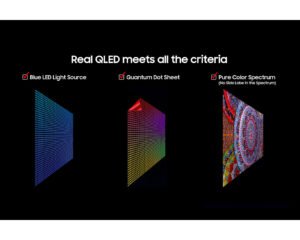
2. Quantum Dot Layer and Colour Boosting
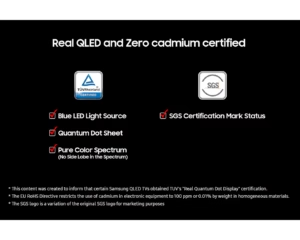
Traditional television panels utilise basic colour filters that degrade brightness over time. The Samsung 55 Inch QLED Q7F 4K Vision AI Smart TV (2025) relies on inorganic Quantum Dot nanocrystals. When energised by the backlight, these particles emit pure light, securing 100% Colour Volume certified to the rigorous DCI-P3 cinematic standard. Backed by the proprietary Colour Booster Pro software system, the TV delivers over a billion precise hues that remain stable even during scenes requiring extreme panel brightness.
3. Contrast, Dimming, and Colour Fidelity
To control backlighting anomalies like light-bleed or greying blacks, the TV uses two distinct contrast systems:
-
Supreme UHD Dimming: This technology divides the frame into hundreds of separate microscopic regions, scanning and adjusting local dimming voltages to improve the variance between light and dark.
-
PANTONE Validation: This certification ensures that the screen accurately reproduces 2,140 verified PANTONE colours and 110 distinct human skin tones, guaranteeing that movies look exactly as the director intended.

Smart Home Ecosystem: One UI Tizen and IoT Hub Features
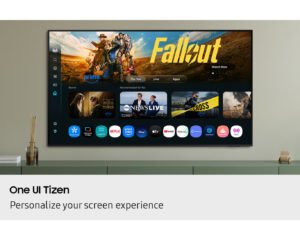
The smart infrastructure of the Samsung 55 Inch QLED Q7F 4K Vision AI Smart TV (2025) is driven by the modern One UI Tizen operating system. This software platform prioritises localised user experience by putting all major global applications alongside a specialised smart home management centre.
Built-In SmartThings and Matter Support
You no longer need an external bridge device to handle your household IoT layout. The Samsung 55 Inch QLED Q7F 4K Vision AI Smart TV (2025) includes a native SmartThings Hub supporting Matter and HCA network standards. By launching the 3D Map View interface, you can project a complete interactive layout of your house directly onto the 55-inch display. This utility allows you to track smart appliances, dim living room light strips, or view active home cameras from your couch.

Long-Term Software Commitment
A major highlight of this platform is the long-term software support. Samsung commits to providing Tizen OS upgrades for up to 7 years. This ensures the Samsung 55 Inch QLED Q7F 4K Vision AI Smart TV (2025) will continue to receive secure application patches, interface modifications, and new feature sets well into the next decade.
Gaming Suite: Fluid Motion and AI Optimisation
Modern console and PC gamers demand specific low-latency variables to keep fast-paced action fluid. The Samsung 55 Inch QLED Q7F 4K Vision AI Smart TV (20

25) features an optimised suite of gaming tools accessible via an on-screen overlay.
┌──────────────────────────────────────────────────────────┐
│ GAME BAR STATUS                                          │
├───────────────┬─────────────────┬────────────────────────┤
│ FPS: 60Hz     │ ALLM: ACTIVE    │ RATIO: 16:9 / 21:9     │
└───────────────┴─────────────────┴────────────────────────┘
-
AI Auto Game Mode (ALLM): The moment an active PlayStation, Xbox, or PC is detected via an HDMI interface, the TV switches off redundant video post-processing layers, driving input lag down to minimal response rates.
-
Motion Xcelerator: This motion interpolation system smooths out fast-paced sports and action content by predicting frame-to-frame paths, removing standard motion ghosting.
-
Super Ultrawide Game View: For PC gaming setups, the TV allows you to change the display aspect ratio from a standard 16:9 configuration to panoramic 21:9 or ultra-wide 32:9 viewing fields.
Audio Architecture and Acoustic Tuning
The internal sound system of the Samsung 55 Inch QLED Q7F 4K Vision AI Smart TV (2025) uses a dual-channel 20W hardware array. Rather than throwing simple stereo sound into the room, it deploys intelligent spatial tracking software to elevate immersion.
Audio Initialisation Procedure
The internal chip analyses the audio stream in real-time. Dialogue frequencies are lifted above background noise during movies, while crowd acoustics are spread wide during sports broadcasts.
Using multi-directional sonic positioning, virtual top-channel audio algorithms trace motion across the screen. If an object flies top-left to bottom-right, the sound sweeps dynamically to simulate multi-speaker setups.
When connected to a compatible soundbar, the TV speakers do not turn off. Instead, they harmonise with the soundbar to expand vertical sound staging.
Full Product Specification Matrix
| Engineering Group | Technical System Details |
| Model Nomenclature | QA55Q7FAAU / Series Q7F (2025 Generation) |
| Panel Surface Area | 55 Inches Diagonal Active Matrix Display |
| Native Resolution | 4K Ultra High Definition ($3840 \times 2160$ Pixels) |
| Silicon Processor | Q4 AI Processor with Neural Upscaling Engines |
| Color Spectrum | 100% Colour Volume with Quantum Dots | PANTONE Validated |
| High Dynamic Range | Quantum HDR, HDR10+ Adaptive, and HLG Engineering |
| Motion Frequency | 60Hz Native Panel with Motion Xcelerator Software |
| Audio Hardware | 2.0-Channel 20W Output Core with OTS Lite Execution |
| Smart Interface | Tizen OS backed by 7 Years of Committed OS Upgrades |
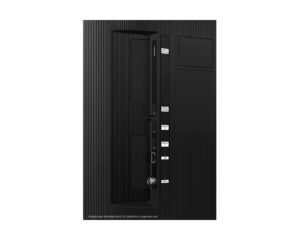
| Physical I/O Ports | 3 x HDMI (Including eARC Support) | 1 x USB-A | LAN Port |
| Wireless Protocols | Wi-Fi 5 Connectivity Framework | Bluetooth 5.3 System |
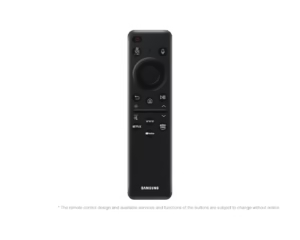
Sustainability Focus: The Samsung 55 Inch QLED Q7F 4K Vision AI Smart TV (2025) ships with Samsung’s SolarCell Remote. This eco-friendly remote completely removes disposable batteries from your home. It charges itself using ambient indoor lighting or via a standard USB-C port, minimizing electronics waste.
Based on 0 reviews
Be the first to review “Samsung 55 Inch QLED Q7F 4K Vision AI Smart TV (2025)”
Related products
-
Televisions, TCL
TCL 43 S5K QLED TV
TCL 43S5K Price in Kenya & Tech Specs.
Feature TCL 43S5K Specifications Panel Type QLED (Quantum Dot) Resolution 2K FHD (1920 x 1080) HDR Standards HDR10, HLG Audio Output 19W with Dolby Audio Connectivity Wi-Fi 5 / BT 5.0 / HDMI / USB Operating System Google TV (2026 Edition) The current TCL 43S5K Price in Kenya at Zidi Electronics typically ranges from KSh 29,999 to KSh 33,000, offering unbeatable QLED value in the sub-50-inch category.
SKU: n/a -
Televisions, TCL
TCL V6C 65 Inch Direct LED 4K HDR Google TV
Key Features of the TCL V6C 65″ Series
-
Direct LED Technology: The TCL V6C 65 Inch Price in Kenya is supported by full-array backlighting. This ensures consistent brightness across the entire 65-inch panel, eliminating “dark corners” and providing a more immersive visual experience.
-
120Hz Game Accelerator: While maintaining a native 60Hz refresh rate, the V6C features 120Hz DLG (Dual Line Gate) technology. This allows for smoother motion and lower latency during gaming sessions on PS5 or Xbox Series X when running in Full HD resolution.
-
HVA Panel Excellence: Featuring a High-Vertical Alignment (HVA) screen, this TV offers a native contrast ratio of 5000:1. This results in deeper blacks and wider viewing angles (>178°), ensuring every seat in your living room is the best seat.
-
Google TV OS: Access over 700,000+ movies and TV episodes across your favourite apps. Google TV organises your content from Netflix, Showmax, and YouTube into one seamless interface based on your interests.
-
Dolby Audio Integration: Experience ultra-realistic sound with crystal-clear dialogue and enhanced bass. The integrated speaker system is optimised to put you in the middle of the action, whether it’s a ball game or a blockbuster movie.
-
Hands-Free Google Assistant: No remote? No problem. The built-in voice control allows you to say “Hey Google” to search for movies, stream apps, or control smart home devices directly through the TV.
SKU: n/a -


There are no reviews yet.